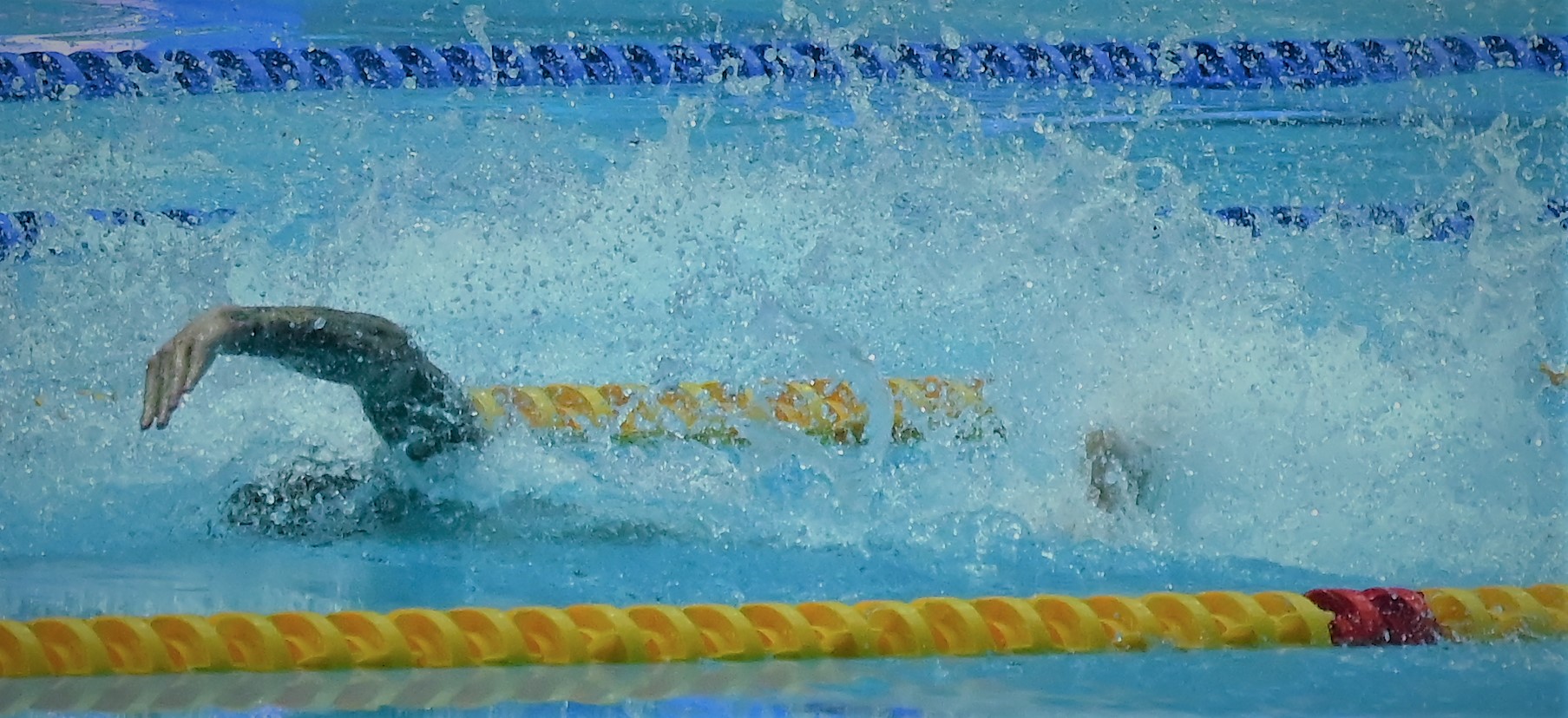

In Part 1 of mywaterworld’s consideration of the “swimming fast observation”, we looked at perceptions of fast swimming.
When observations of “swimming fast” are made, there is very rarely a qualifier for that statement. The observer is implying something, but what? In essence, without a frame of reference, the statement on its own is quite meaningless.
The FINA points system delivers a basis for a comparison. It had its genesis when competitors and fans tried to compare the relative standard of results between events and genders. The examples in Part 1 of our story showed the difficulty of establishing what “fast swimming” was and set out differences in swimming speeds over a number of events.
The starting point of the FINA system is the world record time for an event. There are a world records for all FINA recognized events – elite, masters, juniors and relays. World records change during a year, not all, but some do. The points system deals with that circumstance as well.
In each case, the base world record time is established at a specific date. The base times are defined every year and are based on the latest World Record that was approved by FINA. For short course (SCM) the base times are defined with the cut off date of August 31st. For long course (LCM) the base times are defined at the end of the year (December 31st)1. Masters Swimming Australia (MSA) states that the points calculations on their results portal are based the world record, both SCM and LCM, on the 1st of November of the preceding year.
Those records then establish the base times for those events. Once the relevant world record and the time swum are known, the data is fed into a formula (for the mathematicians amongst us a cubic curve with the base (B) and swim (T) times converted to seconds). The points (P) are then calculated using a formula and their value is expressed as a whole number.
The formula is P = 1000 * ( B / T )3
It follows then, that when the points gained are 1000, a time that equals the world record at the end of either the SCM or LCM dates, has been swum. From there it also follows that where the result of that points calculation is less than 1000, the time swum is slower than the world record at the relevant dates. Where the points are over 1000 this does not necessarily mean that a new world record has been set. It only means that the time swum is faster than the world record at the relevant date in the previous year.
We now have our frame of reference for making a meaningful comparison. The next time someone makes the observation of “swimming fast”, prompt them for a frame of reference or just ask with a smile, “what makes you say that?”
1 FINA Points Table
2 As at 14 November 2020
Masters Swimming Australia (MSA) automatically updates its rankings for all events once results are cleared into their database. The rankings tables include FINA points. Unfortunately, when selecting for Points, the only option available is for “Best Performance”. This means that while an individual may have recorded nine out of the ten highest points, as Australian masters swimmer Dorothy Dickey has2, only the highest points are listed. The only other way of listing is to manually download and amalgamate the data from the MSA results portal and sort by the highest point values.
 mywaterworld.life