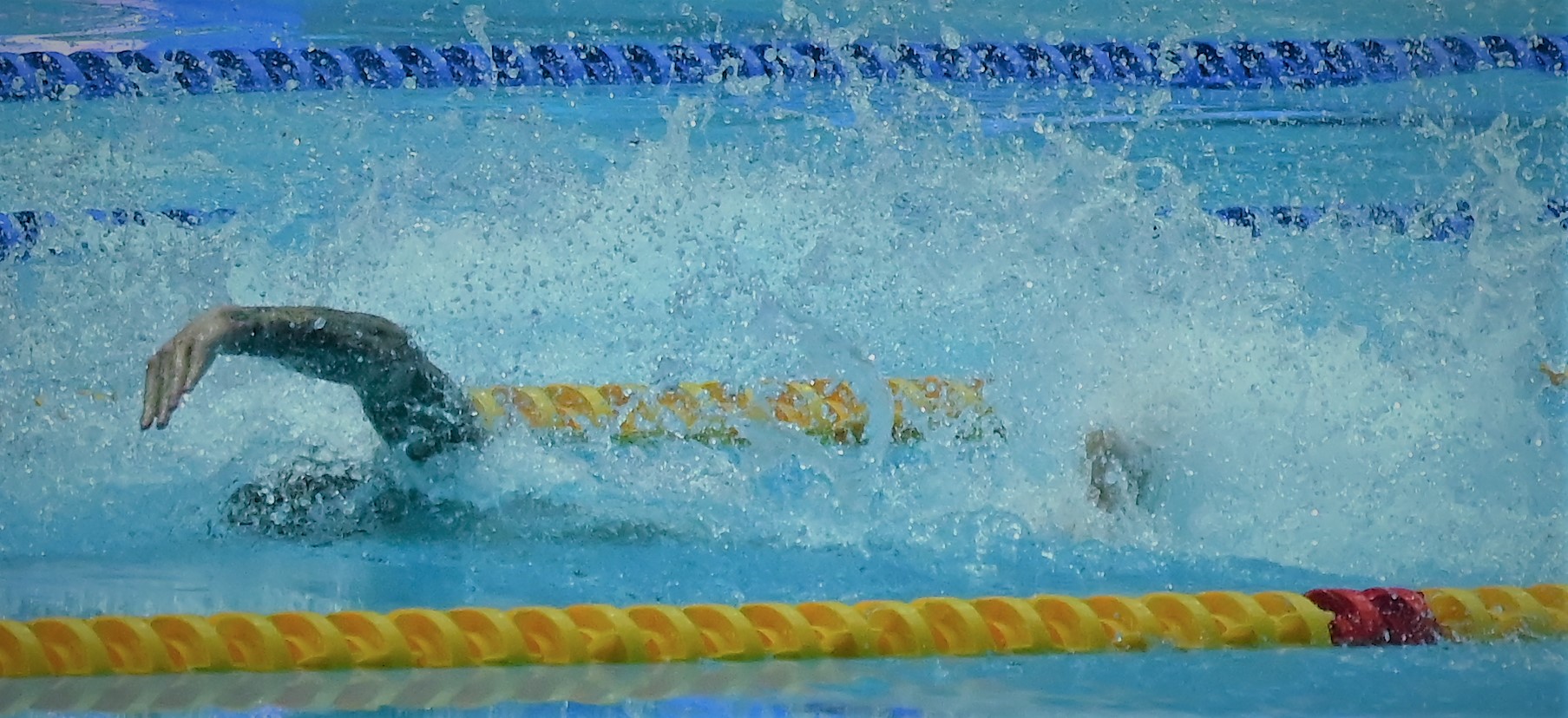

What does it mean when you hear the observation that someone “swims so fast”?
While recently talking to a masters swimmer I was taken aback when they made that observation. Knowing the swimmer, and having trained with them, the observation both surprised and intrigued me. It also made me wonder on the basis of that observation.
Certainly it was made in good faith but without an obvious frame of reference. What I suspect was that the observation was either made in comparison to the swimming speed of the observer or was just a complement – probably the latter. It certainly may appear to have been fast swimming but it was only “fast” in the frame of reference of the observer.
We could consider the swimmer that takes 65 seconds to complete 50m in the fast lane while you take 45 secs to complete the same distance (about 30% faster). When queried, the 65 sec swimmer’s response is often something like “but I think I am swimming fast”, or “the lane was empty so I thought I would use it” – all this despite the sign saying the recommended speed for that lane is 50sec per lap or faster.
So what is fast? That is a concept that needs a frame of reference. What about the stroke, the distance being swum, what is the person’s gender and how old are they?
If we are talking about fast then the fastest time taken to swim 50m freestyle is 20.91 secs – Cesar Cielo Filho from Brazil on 18 December 2019 at an approximate speed of 8.6km per hour.
A 1500m freestyle event is swum at about of 6.2km per hour. The current world 1500m record was set by Yang Sun on 4 August 2012, and at an average speed that is about 25% slower than that swum by Cesar.
We could also do a speed comparison with a women’s 200 breaststroke, The current world record is 2:19.11 and was set by Rikke Pedersen on 1 August 2013. This equates to a speed of 5.2 km per hour.
So now, what is fast? Well, they all are the “fastest” in the world (so far) in their particular categories – their speeds however range between 5.2 and 8.6 km/h.
So how can a comparison be made of how fast competitors are swimming when they race over different distances, using different strokes and are of different genders? There is obviously a need for a common basis for an assessment. Fortunately there is such a system.
The main method used across the world to compare results across events and genders is the FINA points system. Points are calculated and awarded relative to the relevant world record.
In part 2 of this article we will examine the FINA point system in detail and then see how results and achievements can be compared.
If you are interested in a scientific analysis of swimming speeds the paper “ Changes in sex difference in swimming speed in finalists at FINA World Championships and the Olympic Games from 1992 to 20131” makes interesting but technical reading.
Similarly, studies have been done on masters competitors. The paper “Performance trends in master freestyle swimmers aged 25–89 years at the FINA World Championships from 1986 to 20142” is another example of what happens with swimming speeds as masters age through their competitive categories.
1. https://www.ncbi.nlm.nih.gov/pmc/articles/PMC4129435/
2. https://www.ncbi.nlm.nih.gov/pmc/articles/PMC5005862/
 mywaterworld.life